Our History
The legacy of Evening Star Lodge No. 6 dates back to the late 1860s, emerging just two years after the end of the Civil War. As early as 1869, Black Masonry had begun to take root in Alabama, and our Lodge was among the first eight to ten recognized lodges in the state. At the time, due to the absence of a Grand Lodge in Alabama, Evening Star operated under charters from the Grand Lodges of Ohio, Tennessee, and Missouri.
Evening Star Lodge No. 6 received its charter from the Grand Lodge of Tennessee, under which it operated until 1874, when the National Compact Grand Lodge of Alabama was formed in the northern part of the state. In 1878, a historic consolidation of the National Compact and the Independent Most Worshipful Grand Lodge led to the formation of what is now the Most Worshipful Prince Hall Grand Lodge of Alabama. Our Lodge was a key participant in that foundational moment and received its charter on August 14, 1878.
Over the decades, Evening Star Lodge has been a cornerstone of leadership and education in Huntsville. In 1892, our building on Barnett Street temporarily housed the early sessions of William Hooper Councill School before its official campus opened. This connection to education highlights our commitment to empowering the community.
Dr. William Hooper Councill, the founder of Alabama A&M University, was not only an educational pioneer but also a dedicated Mason.We are proud to have contributed several distinguished leaders to the Grand Lodge, including:
- Henry C. Binford, Sr. – Most Worshipful Grand Master (1901–1910)
- Charles V. Hendley – Most Worshipful Grand Master (1936–1967)
- Dr. William H. Councill – Grand Junior Warden (1880), Past Master of Evening Star No.6, and Founder of Alabama A&M University
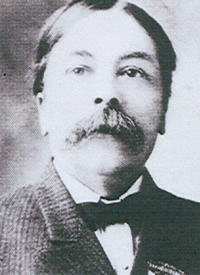
MWGM Henry C. Binford, Sr.
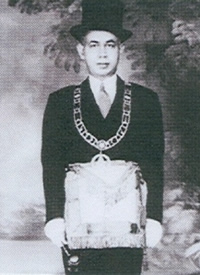
MWGM Charles V. Hendley
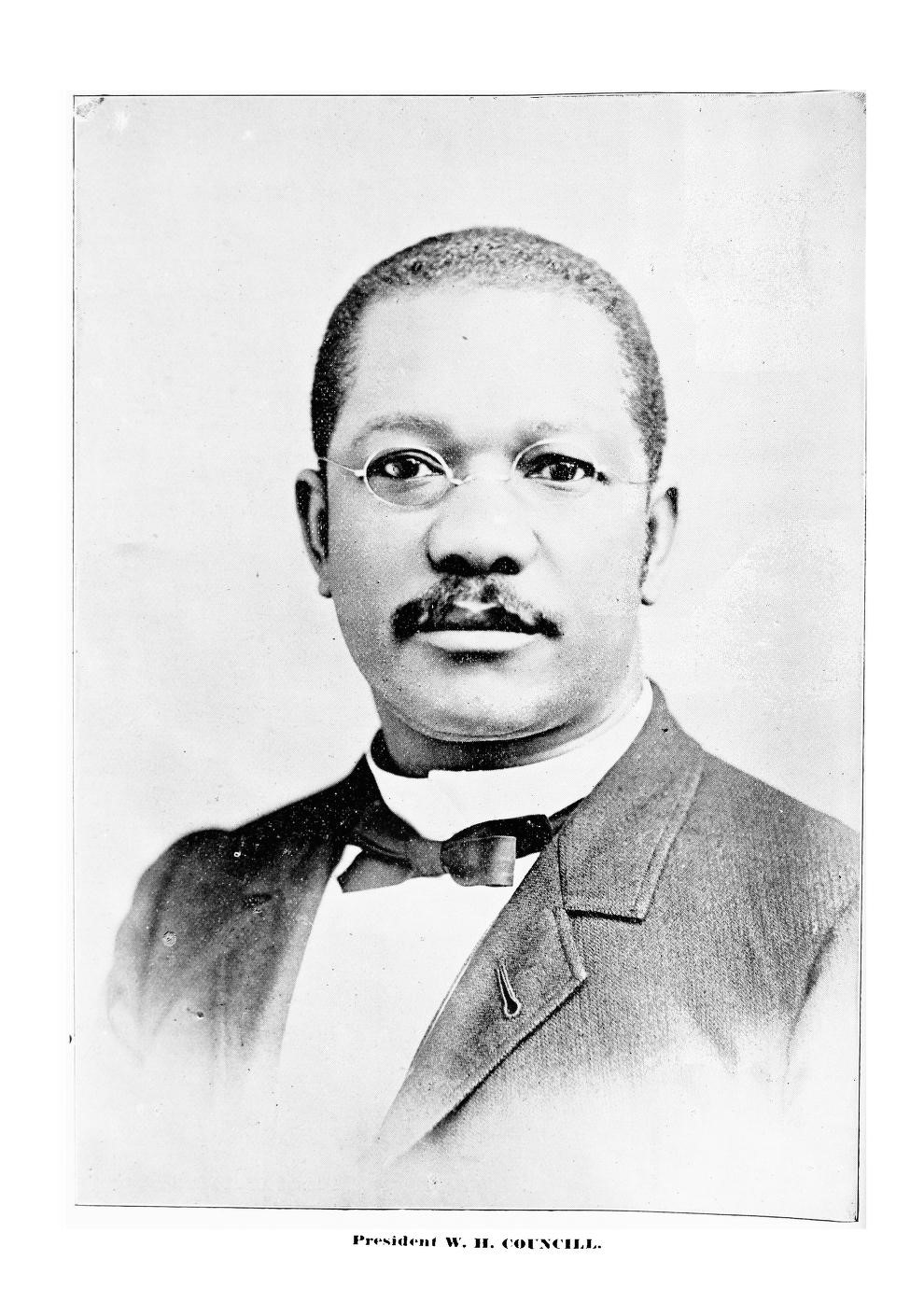
PM Dr. William H. Councill
Through trials, growth, and triumphs, Evening Star Lodge No. 6 continues to shine as a beacon of Masonic excellence, community service, and historical preservation. We honor the Past, serve in the Present, and prepare for the Future.
Honoring Our Legacy Through Art
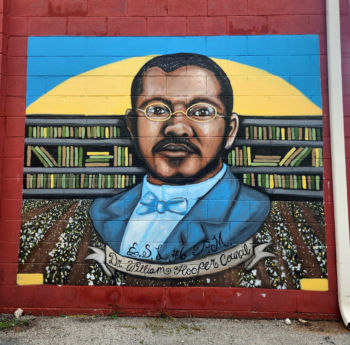
In tribute to Past Master Dr. William Hooper Councill, a commemorative mural has been painted on the exterior of our lodge building. This public-facing artwork honors his pivotal role in our Lodge’s formation and his broader impact as an educational and civic leader.
🎨 Commissioned and funded by our Senior Deacon Stephen Winston, owner of Lynx Gallery LLC, this mural exemplifies our commitment to preserving and celebrating our heritage through art.
🖌️ The mural was painted by Adrian Jennings, a visionary artist known for celebrating Black legacy and community through large-scale works. Read her story here.
Legacy of Prince Hall Freemasonry
The lineage and legitimacy of Evening Star Lodge No. 6 is deeply rooted in the legacy of Prince Hall — a pioneer of African American Freemasonry in the United States. On March 6, 1775, Prince Hall and fourteen free Black men were initiated into Lodge No. 441, Irish Constitution, attached to the British Army in Boston. Although their early Masonic privileges were limited, Prince Hall persisted.
In 1784, Hall successfully petitioned the Grand Lodge of England for a charter, forming African Lodge No. 459. This document became the foundation upon which Black Freemasonry in America was built. Under this authority, he went on to charter lodges in Philadelphia and Providence, establishing what would become the Prince Hall Masonic family.
Prince Hall was appointed Provincial Grand Master in 1791, and his impact continued beyond his lifetime. In 1827, African Grand Lodge declared its independence from the English Grand Lodge — a move that solidified Prince Hall Masonry as a self-determined and enduring institution.
Today, the Prince Hall fraternity boasts over 4,500 lodges worldwide and more than 300,000 members, carrying on the legacy of unity, dignity, and self-determination that Hall envisioned.